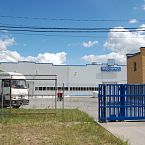
Viessmann’s General Director summarized 20 years of work in Russia and told us about sales growth, a share in the global business and development prospects. In 2018, Viessmann celebrated its 20th anniversary of presence in Russia. The company made real progress in the past years. Its products have become widely known in Russia, and the company has confirmed its well-deserved reputation of a reliable manufacturer. In 2017, Viessmann’s boiler production facility, which is considered the most advanced factory of Viessmann Group, was put into operation in the Lipetsk SEZ. Viessmann’s General Director Marius Schubert gave us an interview about the company’s history, achievements and future plans. When asked where it all started and what the company achieved over the past 20 years, he answered as follows.
Viessmann started exporting equipment to Russia a long time ago. As reported by the technical service division, there are boilers that have been operating in Russia without fail since 1990 when they were delivered from Germany. We opened a representative office in Moscow in 1995; a full-fledged Russian division was founded in 1998. Since then the company survived numerous crises, but always protected its reputation of a heat technology leader committed to its partners.
Answering the question in what cities the company operates, he said the following. As demand was growing, we opened new representative offices in major Russian cities. Apart from the head office in Moscow, we now have offices in Saint Petersburg, Yekaterinburg, Krasnodar, Samara, Novosibirsk, Kazan and, starting from 2017, in Lipetsk.
Then he was asked about Russia’s share in the company’s global business and called it significant. Viessmann considers Russia – along with China, the USA, Canada and the UK – one of its five strategic global markets where it set up local production. Export and representative offices abroad now generate 56% of Viessmann Group’s revenue.
Then we asked the following question. Viessmann supplies its products to many of the former Soviet republics. Is there any difference between their markets and the Russian one? Viessmann’s General Director answered that Russia generated the largest share of revenue across Viessmann Group, much larger than other CIS countries.
What Viessmann products are most popular on the Russian market? How does the Russian market differ from the European one? The trends we see in Russia are exactly the same as in Europe, but they form with some lag. Demand for condensing boilers keeps growing. At present, we sell only this type of boilers in Western Europe as conventional boilers up to 400 kilowatts are prohibited by law due to their low energy efficiency. Russian consumers also start to realize that condensing technology is much more efficient in operation.
According to our estimates, the price difference between condensing and conventional boilers will be compensated in two or two and a half years – after that consumers start saving money. As energy prices rise, the benefits offered by condensing technology become increasingly apparent.
Is there demand for power efficient solutions and renewable energy sources, heat pumps and solar collectors in Russia today? Yes, there is, but it is not very high. I believe that when dealing with energy efficiency issues, much depends on regulations and government support. We ship several heat pump models to Russia, though demand for them is not high.
What about the sales of industrial systems? Sales of industrial boilers in Russia are well ahead of European indicators and even exceed our own expectations. Russia is a vast country with many climatic zones. It means there will always be demand for such systems. And that is the reason why we built an industrial boiler factory in Lipetsk and put it into operation in 2017.
Tell us more about the Lipetsk factory. What benefits has it brought? And what are the current plans? We set up a local production facility in Lipetsk on the back of growing demand in Russia. Our goal is to offer the most favorable terms to our partners and customers and bring affordable products to the market. We are especially proud of the plant’s training center that demonstrates the whole product range in live action. Here we provide technical training to system operators on a regular basis.
Have I got it right that the factory’s products are in high demand? Demand growth exceeds our expectations. Before the global financial crisis, we were selling over three hundred industrial boilers per annum on the Russian market. The boilers were delivered from Germany in those years. We see now that we will soon reach these performance targets again, but this time the Lipetsk factory will satisfy the demand. Earlier this year, we added the second shift at the factory to satisfy the growing demand.
What are your total sales in Russia? Speaking about the Lipetsk factory, its production capacity is 250-300 industrial boilers per annum, and I believe we are going to reach this target already in 2019. By the end of 2018, we will sell around 170 boilers. As for household systems, each year we sell 25,000 boilers, not to mention accessories, including radiators and heating system components, ventilation units and water treatment systems.
What product innovation should the Russian consumers expect in 2019? As usual, we are going to present our new products at the ISH trade fair to be held in Frankfurt am Main in March. Some of the products to be presented there will also be sold in the Russian market. Besides, we plan to expand our range of maintenance services and engineering tools. There will be some other innovations that will be a pleasant surprise for our Russian customers.
#News of SEZ